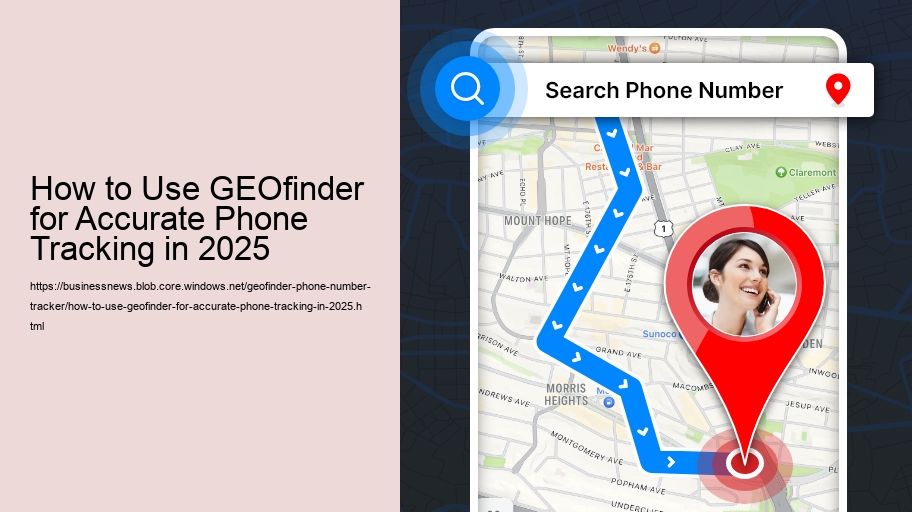
Setting Up Your GEOfinder Account
In the rapidly evolving world of technology, the ability to accurately track a phones location has become a crucial tool for personal security, business management, and even parental supervision. By 2025, GEOfinder has emerged as a leading platform for phone tracking, renowned for its precision and user-friendly interface. Setting up your GEOfinder account is the first essential step towards harnessing this powerful tool to meet your specific needs.
To begin your journey with GEOfinder, the initial step involves visiting their official website or downloading the app from your devices app store. The sign-up process is straightforward, designed to be accessible even to those with minimal technical expertise. You will be prompted to create an account using a valid email address, followed by setting a secure password. This step is crucial as it ensures that your account remains protected from unauthorized access.
Once your account is created, the next step is verification. This usually involves confirming your email address or phone number, which adds an extra layer of security. After verification, you will be guided through a series of setup instructions tailored to customize the application according to your needs. This might involve setting preferences for notifications, selecting which devices you wish to track, and configuring privacy settings to ensure that your data remains confidential.
A key feature of GEOfinder is its integration with various devices and operating systems. Whether you are using an Android, iOS, or a desktop, GEOfinder ensures seamless synchronization across platforms. This interoperability allows you to track phones accurately from virtually any device, providing flexibility and convenience.
One of the distinguishing characteristics of GEOfinder is its emphasis on accuracy. The platform utilizes advanced GPS technology, combined with triangulation methods, to provide real-time location data. As a user, you will have access to a detailed map interface, where you can view the tracked devices location with pinpoint accuracy. This is particularly beneficial for businesses that require fleet management or parents who wish to know their children's whereabouts.
Moreover, GEOfinder offers a range of additional features designed to enhance user experience. Find out more about GEOfinder here. You can set up geofencing alerts, which notify you when a tracked device enters or leaves a designated area. This can be particularly useful for ensuring that employees remain within work zones or that children do not wander into unsafe areas.
In 2025, concerns about privacy and data security are paramount. GEOfinder addresses these concerns by implementing robust security measures to safeguard user data. All data transmissions are encrypted, and users have full control over who can access their location information. This ensures that while you benefit from the apps powerful tracking capabilities, your personal information remains secure.
In conclusion, setting up your GEOfinder account is a straightforward process that opens the door to a world of precise and reliable phone tracking. Whether for personal, familial, or business purposes, GEOfinder stands as a testament to how technology can be harnessed to enhance safety and efficiency in our daily lives. As we move further into 2025, having a GEOfinder account will likely become an indispensable tool for those who value security, accuracy, and peace of mind.
Navigating the GEOfinder Interface
Navigating the GEOfinder Interface: How to Use GEOfinder for Accurate Phone Tracking in 2025
In the rapidly advancing technological landscape of 2025, GEOfinder has emerged as a leading tool for accurate phone tracking, meeting the growing demands for precision and reliability. Whether its for personal security, parental control, or business management, understanding how to effectively navigate the GEOfinder interface is crucial for maximizing its potential. This essay provides a comprehensive guide to using GEOfinder, ensuring that users can efficiently harness its capabilities for accurate phone tracking.
GEOfinders interface is designed with user-friendliness in mind, yet it offers a robust suite of features that require some familiarization. Upon launching the application, users are greeted with a clean and intuitive dashboard. This dashboard is the central hub from which all tracking activities are managed. At the top of the interface, a navigation bar offers quick access to the main features: real-time tracking, historical data, geofencing, and settings. Each section is integral to the comprehensive functionality of GEOfinder.
To begin tracking a device, users must first ensure that the target phone is registered within the application. This process involves a simple setup where the phone number of the device is linked to the GEOfinder account. Once registered, real-time tracking can be initiated. By selecting the Real-Time Tracking option from the navigation bar, users are presented with a map interface displaying the current location of the registered device. The map is highly detailed, allowing for zooming in and out, panning, and switching between different map views such as satellite or terrain.
One of the standout features of GEOfinder is its ability to access historical location data. By navigating to the Historical Data section, users can view a timeline of the devices past locations. This feature is particularly useful for analyzing movement patterns over time, providing insights into the travel history of the tracked device. Users can select specific dates and times to view detailed routes, complete with time stamps and location markers.
Geofencing is another powerful tool within the GEOfinder arsenal. This feature allows users to define virtual boundaries on the map and receive notifications when the tracked device enters or exits these predefined areas. Setting up a geofence is straightforward; users simply select the Geofencing tab, draw a perimeter on the map, and configure notification preferences. This functionality is invaluable for parents monitoring their childrens movements, or for businesses ensuring that company assets remain within designated areas.
The settings section of the GEOfinder interface provides customization options that enhance the user experience. Here, users can adjust privacy settings, manage device registrations, and configure notification preferences. The application prioritizes user privacy and security, offering encryption and authentication features to protect sensitive data.
In conclusion, navigating the GEOfinder interface in 2025 is a seamless experience that empowers users with precise and reliable phone tracking capabilities. By understanding the layout and functionalities of the dashboard, real-time tracking, historical data access, geofencing, and customizable settings, users can fully leverage the potential of GEOfinder. As technology continues to evolve, tools like GEOfinder play a critical role in meeting the diverse needs of individuals and organizations alike, ensuring safety, security, and efficiency in an increasingly connected world.
Initiating a Phone Tracking Request
In an increasingly interconnected world, the ability to locate a phone accurately has become more crucial than ever. Whether its for ensuring the safety of loved ones or managing business assets, phone tracking technology plays a vital role. Enter GEOfinder, a sophisticated tool that promises precise phone tracking capabilities. As we look ahead to 2025, its essential to understand how to initiate a tracking request using GEOfinder, ensuring both efficacy and respect for privacy.
GEOfinder stands out due to its user-friendly interface and robust tracking features. Designed for both personal and professional use, this tool allows users to pinpoint a phones location with remarkable accuracy. To initiate a tracking request successfully, one must first understand the platforms mechanics and adhere to ethical guidelines.
The first step in using GEOfinder is to create an account on their website or app. This process typically involves providing your email, setting a secure password, and verifying your identity. Once registered, users gain access to a dashboard where they can manage their tracking activities. It is crucial to familiarize oneself with the platforms terms of service to ensure compliance with legal and ethical standards.
To initiate a tracking request, users must input the phone number of the device they wish to track. GEOfinder then utilizes a combination of GPS, Wi-Fi, and cell tower triangulation to determine the phones location. The platform offers real-time tracking, allowing users to monitor movements as they happen. This feature is particularly useful for parents wishing to keep tabs on their children or businesses tracking fleet vehicles.
While the technology behind GEOfinder is impressive, one cannot overlook the importance of privacy considerations. In 2025, data protection and privacy remain top concerns, and rightly so. GEOfinder requires users to obtain consent from the phone owner before initiating a tracking request. This ensures that the tool is used responsibly and ethically, respecting individuals rights to privacy.
Moreover, users must remain transparent about their intentions when tracking someone. For instance, parents should discuss tracking with their children, explaining the purpose and ensuring its for their safety. Similarly, businesses should inform employees if company devices are being monitored, maintaining trust and transparency.
In conclusion, GEOfinder offers a powerful solution for accurate phone tracking, but it comes with a responsibility to use it ethically. As technology continues to evolve, understanding how to initiate a tracking request while respecting privacy will remain crucial. By adhering to ethical guidelines and maintaining transparency, users can harness the full potential of GEOfinder, ensuring safety and peace of mind in 2025 and beyond.
Analyzing Tracking Data and Results
In an increasingly interconnected world, where our digital footprints are as telling as our physical ones, the ability to accurately track a phone has become a highly sought-after skill. As we approach 2025, tools like GEOfinder are revolutionizing the way we think about phone tracking, offering unparalleled precision and ease of use. This essay explores how GEOfinder can be effectively utilized for accurate phone tracking, while also considering the implications of analyzing tracking data and results.
GEOfinder stands out in the crowded field of phone tracking technology due to its comprehensive and user-friendly interface. By leveraging advanced GPS technology and real-time data analytics, GEOfinder provides users with precise location information. This is particularly useful in various scenarios, such as locating lost phones, monitoring the whereabouts of family members for safety reasons, or even for businesses tracking the logistics of their mobile assets.
The core functionality of GEOfinder is its ability to provide accurate, real-time tracking data. This is achieved through a combination of GPS technology and network-based tracking, which ensures that users receive the most precise information possible. In 2025, this level of accuracy is crucial, as more people rely on mobile devices for both personal and professional purposes. With GEOfinder, users can rest assured that the location data they receive is both timely and reliable.
Analyzing tracking data and results is an integral part of using GEOfinder effectively. By examining the data provided, users can identify patterns and trends that may be useful for various applications. For instance, parents can monitor their childrens daily routes to ensure they are following safe paths to school, while businesses can optimize their delivery routes based on traffic patterns and time efficiency. The ability to analyze this data empowers users to make informed decisions, enhancing both safety and efficiency.
However, as with any powerful tool, the use of GEOfinder comes with responsibilities and ethical considerations. It is imperative for users to respect privacy rights and only track individuals or devices with proper consent. Misuse of tracking technology can lead to privacy violations and legal repercussions. Therefore, understanding the legal framework surrounding phone tracking in ones jurisdiction is essential to ensure compliance and ethical usage.
In conclusion, as we advance further into the digital age, tools like GEOfinder are becoming indispensable for accurate phone tracking. By providing real-time, precise location data, GEOfinder empowers users to make informed decisions, whether for personal safety, business logistics, or asset management. However, it is crucial to approach this technology with an understanding of its ethical implications and to use it responsibly. As we harness the power of tracking tools in 2025, balancing technological advancement with respect for privacy will be key to maximizing their benefits.